

As winter comes to an end and spring arrives, many of us start looking around the house and garden thinking, “It’s time to get this place sorted.”
The garden needs attention, the lawn needs mowing, outdoor furniture needs cleaning, and suddenly that DIY project you’ve been putting off for six months becomes a weekend priority.
While gardening and DIY are great ways to stay active, they can also place demands on your body that you may not have been exposed to during the colder months. The combination of repetitive movements, lifting, kneeling, bending, twisting and working in awkward positions can quickly lead to aches and injuries.
At On Path Physio, we often see patients in spring who have simply done too much, too quickly.
Here are some of the most common injuries and problems to watch out for.
1. Lower Back Pain After Gardening
Lower back pain is probably one of the most common complaints associated with gardening and DIY.
Digging, planting, weeding, lifting bags of soil, and moving garden equipment can involve repeated bending and twisting. The problem is often not one movement, but the volume of work being performed.
For example, you might spend three hours bent over a garden bed after not doing that type of activity for several months.
Your back may not be “weak” – it may simply be unprepared for the workload.
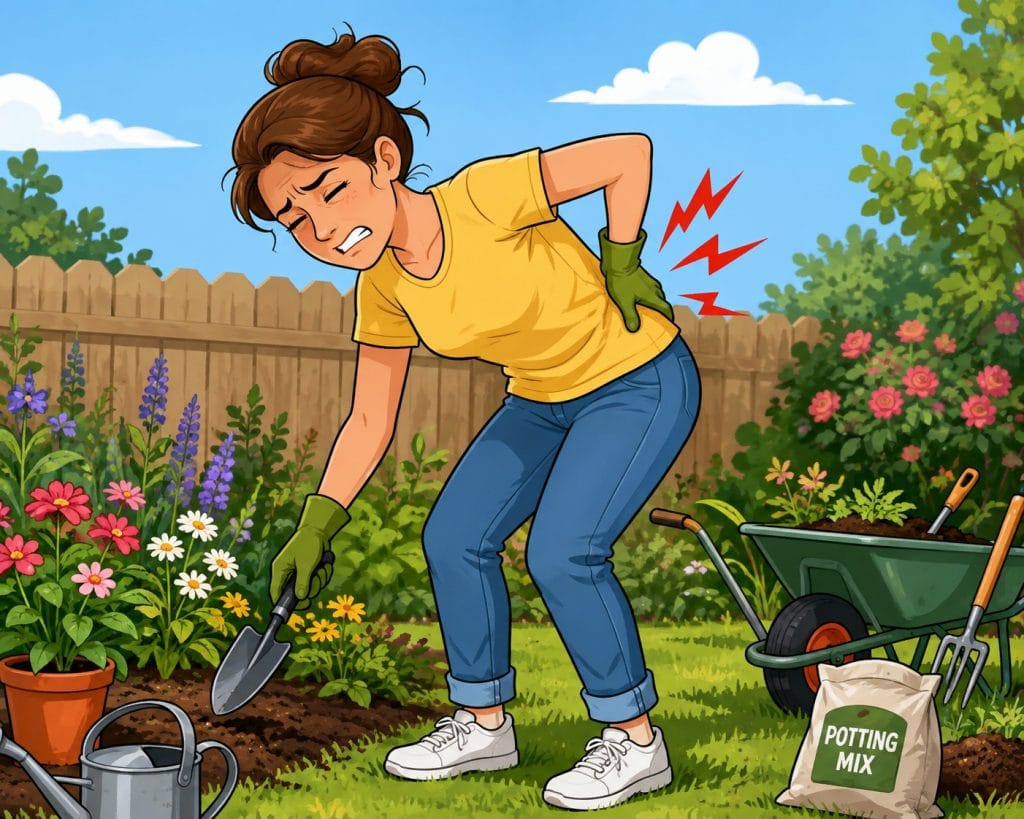
Common Triggers for Lower Back Pain include:
- Lifting heavy bags of soil or mulch
- Digging and shovelling
- Repeated bending
- Moving pot plants
- Carrying tools
- Working in a sustained bent-over position
- Twisting while lifting
A good strategy is to break the job into smaller periods rather than attempting to complete everything in one afternoon.
2. Shoulder Pain Causes: Common Shoulder Conditions and Activities that Increase Symptoms
Painting, pruning, drilling, sanding and reaching overhead can all place significant stress on the shoulder.
This is particularly relevant if you’ve spent much of winter being relatively inactive.
The shoulder relies on a combination of strength, mobility and coordination. Suddenly spending hours with your arms above shoulder height can irritate the muscles and tendons around the shoulder.
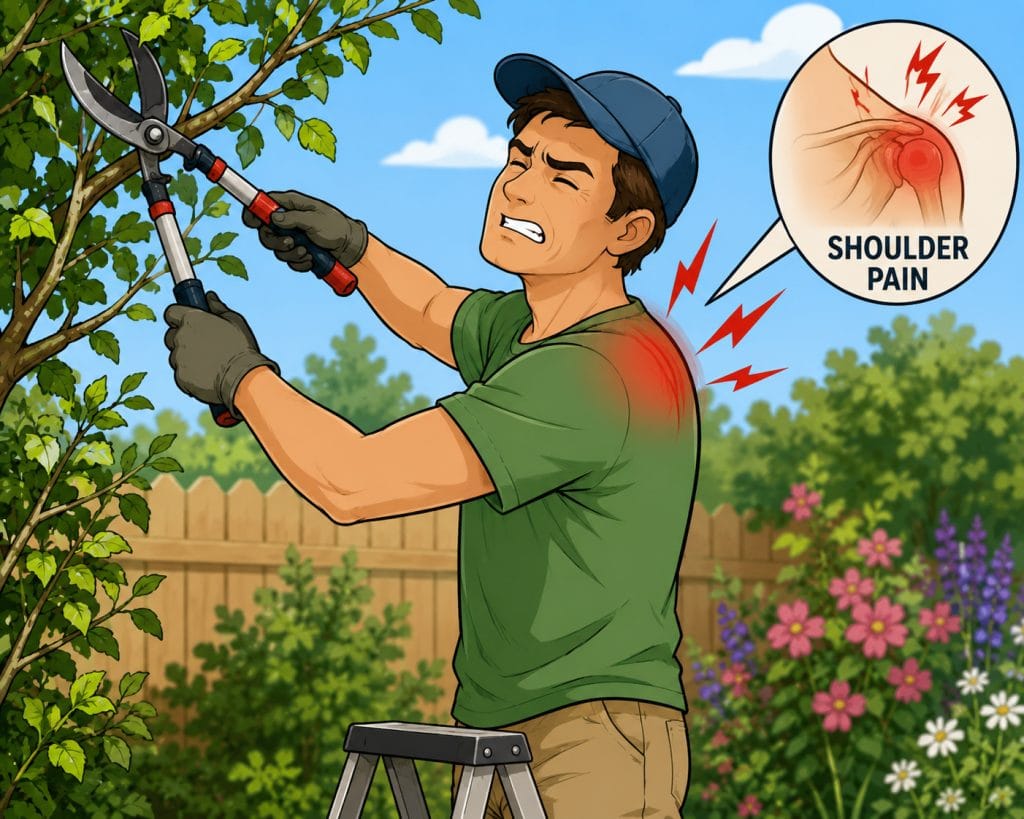
You may notice shoulder pain when:
- Reaching overhead
- Hanging curtains
- Painting ceilings or walls
- Pruning trees
- Using power tools
- Lifting objects away from your body
- Reaching behind your back
Shoulder pain can sometimes start as a mild ache but become increasingly noticeable over the following few days.
3. Tennis Elbow from Gardening and DIY Activities
You don’t need to play tennis to develop tennis elbow.
Repeated gripping and wrist movements are common during gardening and DIY. Using secateurs, screwdrivers, hammers and other hand tools for extended periods can overload the muscles and tendons around the outside of the elbow.
You may experience pain when:
- Gripping tools
- Opening jars
- Lifting a kettle
- Shaking hands
- Using secateurs
- Carrying bags or buckets
The key issue is often repetitive loading without enough recovery time.
Changing tasks regularly and taking short breaks can significantly reduce the amount of repetitive stress placed on your elbow.
4. Knee Pain
Gardening can be particularly demanding on the knees.
Kneeling, squatting, crawling around garden beds and repeatedly standing up and down can aggravate an already sensitive knee.
People with existing knee osteoarthritis may notice an increase in:
- Knee stiffness
- Swelling
- Pain after prolonged kneeling
- Pain going up and down stairs
- Difficulty getting up from the ground
If kneeling is uncomfortable, consider using a gardening stool or raised garden beds to reduce the amount of time spent on the ground.
And remember – pain during a gardening project isn’t necessarily something you need to push through.
5. Neck Pain
Looking down for prolonged periods while planting, weeding or working on a project can place considerable stress on the neck and upper back.
The combination of: head forward + arms reaching forward + prolonged duration can result in neck and upper thoracic stiffness.
You may notice symptoms later that evening or the following morning rather than during the activity itself.
Regularly changing your position and standing upright for a few minutes can help prevent this build-up of stiffness.
6. Wrist and Hand Injuries
Your hands can take a surprising amount of punishment during DIY and gardening.
Repeated gripping, cutting, drilling and hammering can aggravate the wrist and hand, particularly if you suddenly increase your workload.
Common symptoms include:
- Wrist pain
- Thumb pain
- Finger stiffness
- Reduced grip strength
- Aching after using tools
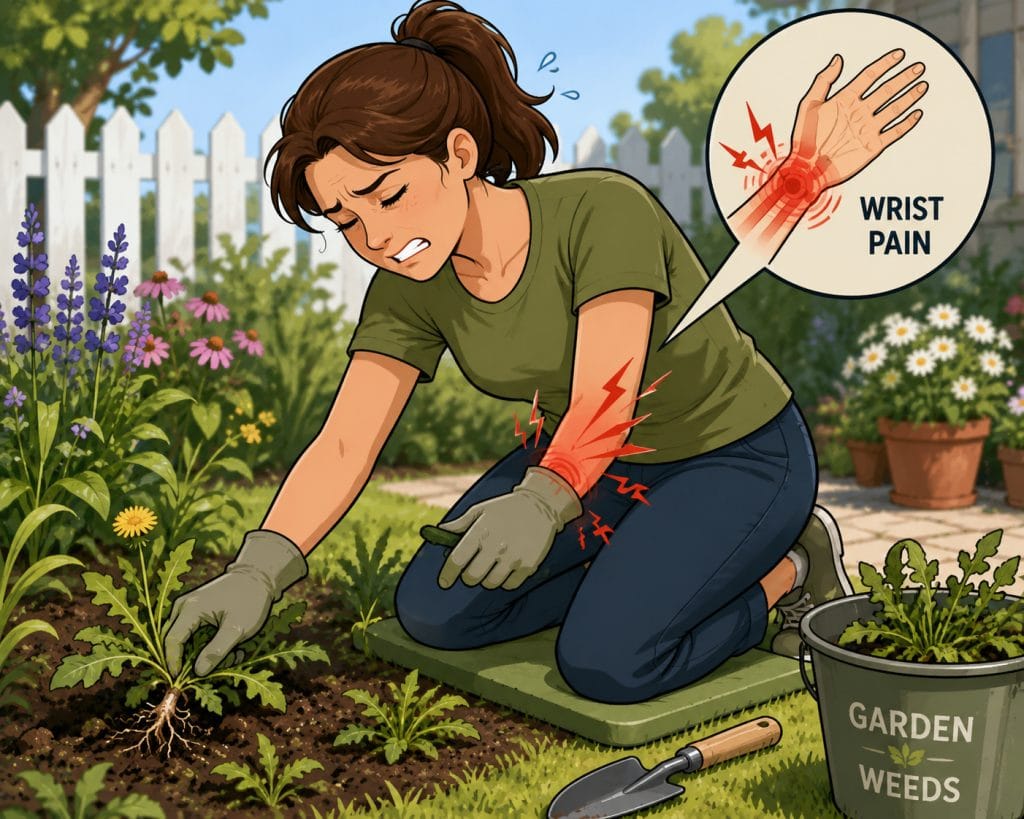
Using appropriately sized tools and avoiding excessively tight gripping can help reduce unnecessary stress.
The Biggest Problem: Doing Too Much Too Soon
One of the most important things to understand about spring gardening and DIY injuries is that the activity itself isn’t necessarily the problem.
The problem is often the sudden change in workload.
You may have spent much of winter doing relatively little physical activity. Then the first sunny weekend arrives, and you spend six hours digging, lifting, pruning and cleaning.
Your motivation may be ready for spring.
Your body may not be.
This is why gradual exposure is so important.
How to Prevent Spring DIY Injuries
1. Start slowly
Don’t try to complete the entire garden in one weekend.
Break larger projects into smaller jobs and spread them throughout the week.
2. Change positions regularly
Avoid spending hours in the same position.
If you’ve been kneeling, stand up. If you’ve been bending forward, straighten up. If you’ve been working overhead, bring your arms down.
Your body generally doesn’t like prolonged positions — even if those positions aren’t particularly strenuous.
3. Use your legs when lifting
When lifting bags of soil, pot plants or equipment, keep the load close to your body and avoid combining heavy lifting with twisting.
If something is particularly heavy or awkward, ask for help.
4. Take breaks before you need them
Don’t wait until you’re exhausted before taking a break.
Short, regular breaks can help prevent fatigue from accumulating and affecting your movement technique.
5. Warm up
You don’t need an elaborate gym routine before gardening.
A few minutes of walking, gentle squats, lunges, shoulder movements and trunk rotations can help prepare your body for the activity ahead.
6. Listen to your symptoms
There is a difference between normal muscle fatigue and pain that is becoming progressively worse.
If a particular movement repeatedly causes pain, modify the activity rather than simply pushing through it.
When Should You See a Physiotherapist?
If pain persists for several days after your gardening or DIY project, is getting progressively worse, or interferes with normal activities such as sleeping, walking, lifting, or working, it may be worth getting assessed.
A physiotherapist can help determine what is contributing to your symptoms and develop a plan to get you back to the activities you enjoy.
At On Path Physio, our goal isn’t simply to get rid of your pain. We want to help you understand why the problem occurred, how to manage it, and how to build your body’s capacity so you can get back to doing the things you enjoy.
Spring Is the Time to Get Moving – Just Do It Gradually
Gardening and DIY are excellent forms of physical activity. They get you moving, outdoors and using your body in ways that everyday life sometimes doesn’t.
You don’t need to avoid these activities because you’re worried about injury.
Instead, think about building your workload gradually.
Start with 30–60 minutes, change positions regularly, take breaks and increase the amount of work you do over time.
Your garden might be ready for spring. Make sure your body is ready too.
Ready to take the next step? Book an appointment with OnPathPhysio today and start your journey towards better movement and long-term recovery.