

If you’ve ever experienced jaw pain while eating, talking, yawning or even first thing in the morning, you’re not alone. As a physiotherapist from On Path Physio who looks after jaw pain management and TMJ disorders, one of the most common questions I hear is:
Why does my jaw hurt?
The answer isn’t always straightforward. Jaw pain can have several causes and many people are surprised to learn that it often involves much more than just the jaw itself. Fortunately, jaw pain physio and evidence-based treatment can effectively reduce symptoms and restore normal function.
Let’s answer some of the most common questions people ask about TMJ pain and dysfunction.
What is the TMJ?
The temporomandibular joint (TMJ) is the joint that connects your lower jaw (mandible) to your skull. You have one on each side of your face, just in front of your ears.
These joints are responsible for opening and closing your mouth, chewing, speaking, yawning and many other daily movements. Because they are used constantly throughout the day, they can become irritated, overloaded or dysfunctional.
Many people seek TMJ physio when these joints become painful or begin to limit everyday activities.
Why does my jaw hurt when I eat?
Pain while eating is one of the most common symptoms of TMJ dysfunction.
This can occur because:
- The jaw muscles are overworked or tight.
- The joint itself is irritated or inflamed.
- There is excessive pressure within the joint.
- The cartilage disc inside the joint is not moving properly.
Foods that require a lot of chewing such as steak, chewy bread, nuts or chewing gum can often aggravate symptoms.
If you’re wondering how to help jaw pain, reducing aggravating activities and seeking early assessment from a physiotherapist can significantly improve recovery.

Why does my jaw click or pop?
Jaw clicking is extremely common.
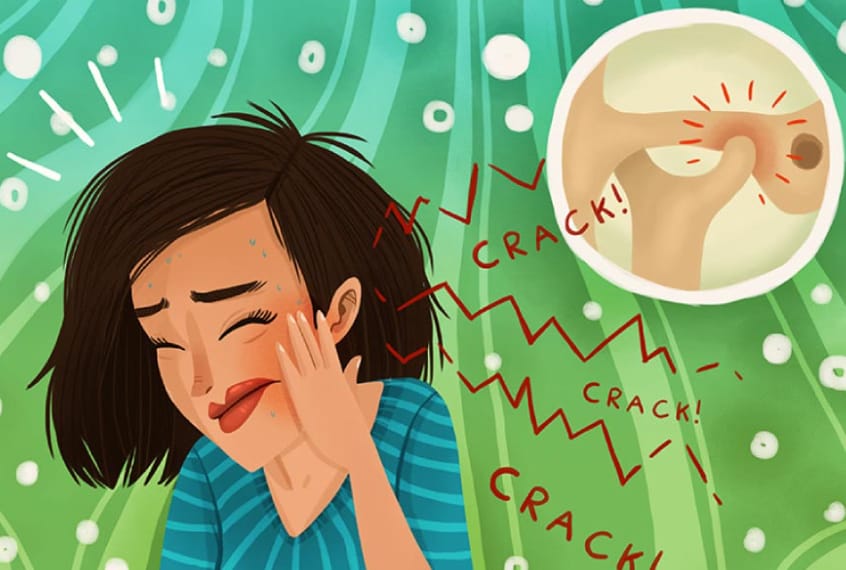
In many cases, a clicking jaw occurs when the small cartilage disc inside the TMJ moves slightly out of position and then returns during movement.
While a clicking jaw is not always painful or concerning, it may indicate that the joint is not functioning optimally.
If clicking is accompanied by pain, locking, difficulty opening your mouth or worsening symptoms, it is worth having it assessed by the team at On Path Physio. Early TMJ physiotherapy can often improve jaw mechanics and reduce symptoms before they become chronic.
Why do I wake up with jaw pain?
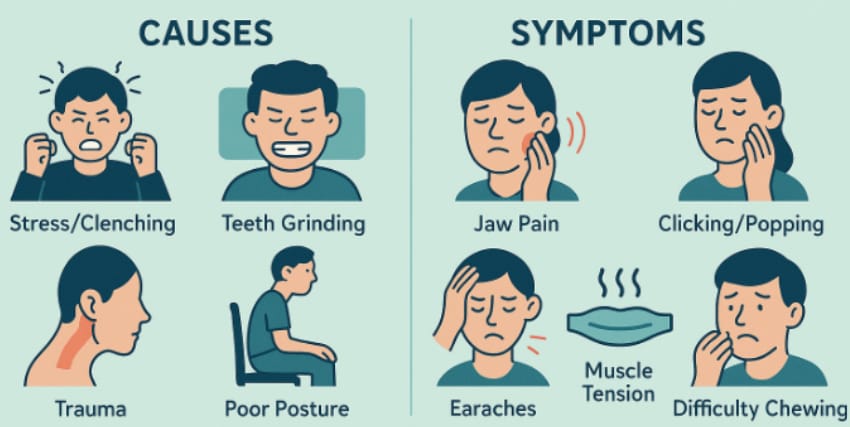
Morning jaw pain often points toward clenching or grinding your teeth during sleep.
Many people are completely unaware they do this until symptoms develop.
Common signs include:
- Jaw soreness upon waking.
- Tightness around the temples.
- Headaches in the morning.
- Tooth sensitivity or wear.
- Fatigue in the jaw muscles.
Stress, anxiety, poor sleep quality and certain lifestyle factors can contribute to nighttime clenching.
Can stress cause jaw pain?
Absolutely.
When we’re stressed, many people subconsciously tighten their jaw muscles throughout the day. Some people clench their teeth while concentrating, driving, working or exercising.
Over time, this constant muscle tension can lead to:
- Jaw pain.
- Facial pain.
- Headaches.
- Neck tension.
- Increased pressure on the TMJ.
Stress may not be the sole cause of jaw pain, but it is often a significant contributing factor. A comprehensive jaw physio assessment will identify both physical and lifestyle factors contributing to your symptoms.
Can my neck cause jaw pain?
Yes, and this surprises many people.
The jaw and neck share close muscular and neurological connections. Problems in the upper neck can influence how the jaw moves and functions.
In fact, many people with TMJ disorders also experience:
- Neck pain.
- Shoulder tension.
- Headaches.
- Poor posture.
As physiotherapists at On Path Physio, we assess both the jaw and the neck because treating only one area often overlooks an important piece of the puzzle. This whole-body approach is a key component of effective physio for TMJ disorder.
Why does my jaw feel tight or tired?
A tight or fatigued jaw is often related to overactivity of the chewing muscles.
Common causes include:
- Teeth grinding.
- Jaw clenching.
- Excessive gum chewing.
- Nail biting.
- Chewing on pens or pencils.
- Prolonged dental procedures.
Like any muscle in the body, the jaw muscles can become overloaded and develop tension, tenderness and fatigue. Early physio for jaw pain can help reduce muscle tension, improve joint mobility and restore normal jaw function.
Why does my jaw lock?
Jaw locking can occur when the disc within the TMJ becomes displaced and restricts movement.
You may notice:
- Difficulty opening your mouth fully.
- Sudden episodes where the jaw gets stuck.
- Pain when attempting to open wider.
Jaw locking should be professionally assessed, particularly if it is recurring or worsening. TMJ physiotherapy can help restore movement and reduce the likelihood of ongoing dysfunction.
How Can Physiotherapy Help TMJ Pain?
Many people don’t realise that physiotherapists can assess and treat jaw disorders.
Whether you’re looking for TMJ physio, jaw physiotherapy, or physio for jaw pain, treatment is designed to address both the symptoms and the underlying cause.
Treatment often includes:
- Hands-on treatment of the jaw and surrounding muscles.
- Joint mobilisation techniques.
- Neck assessment and treatment.
- Postural correction.
- Jaw movement retraining.
- Education on clenching and grinding habits.
- Exercises to improve jaw function and reduce pain.
Physiotherapy jaw pain management focuses on restoring normal movement patterns while reducing muscle tension and improving joint function.
For patients with persistent symptoms, physio for TMJ disorder provides an evidence-based, conservative treatment option that may help avoid more invasive interventions.
The goal is not only to relieve symptoms but also to identify and address the factors contributing to the problem.
When should I seek help for jaw pain?
Consider seeking professional advice if you experience:
- Persistent jaw pain.
- Difficulty chewing.
- Jaw clicking accompanied by pain.
- Jaw locking.
- Frequent headaches.
- Neck pain associated with jaw symptoms.
- Limited mouth opening.
- Symptoms that interfere with daily activities.
Early assessment often leads to faster recovery and helps prevent symptoms from becoming chronic.
The Bottom Line
Jaw pain is common, but it shouldn’t be ignored. Whether your symptoms are caused by muscle tension, clenching, stress, neck dysfunction or problems within the TMJ itself, effective treatment is available.
At On Path Physio, we provide comprehensive jaw physiotherapy and TMJ physio services that take a whole-body approach to recovery. We assess not only the joint but also the muscles, neck, posture and lifestyle factors that may be contributing to your symptoms.
If you’re experiencing jaw pain, clicking, locking or headaches, physio for jaw pain can help identify the cause, restore movement and guide the most effective treatment plan.
Book an appointment today and take the first step toward a pain-free jaw.