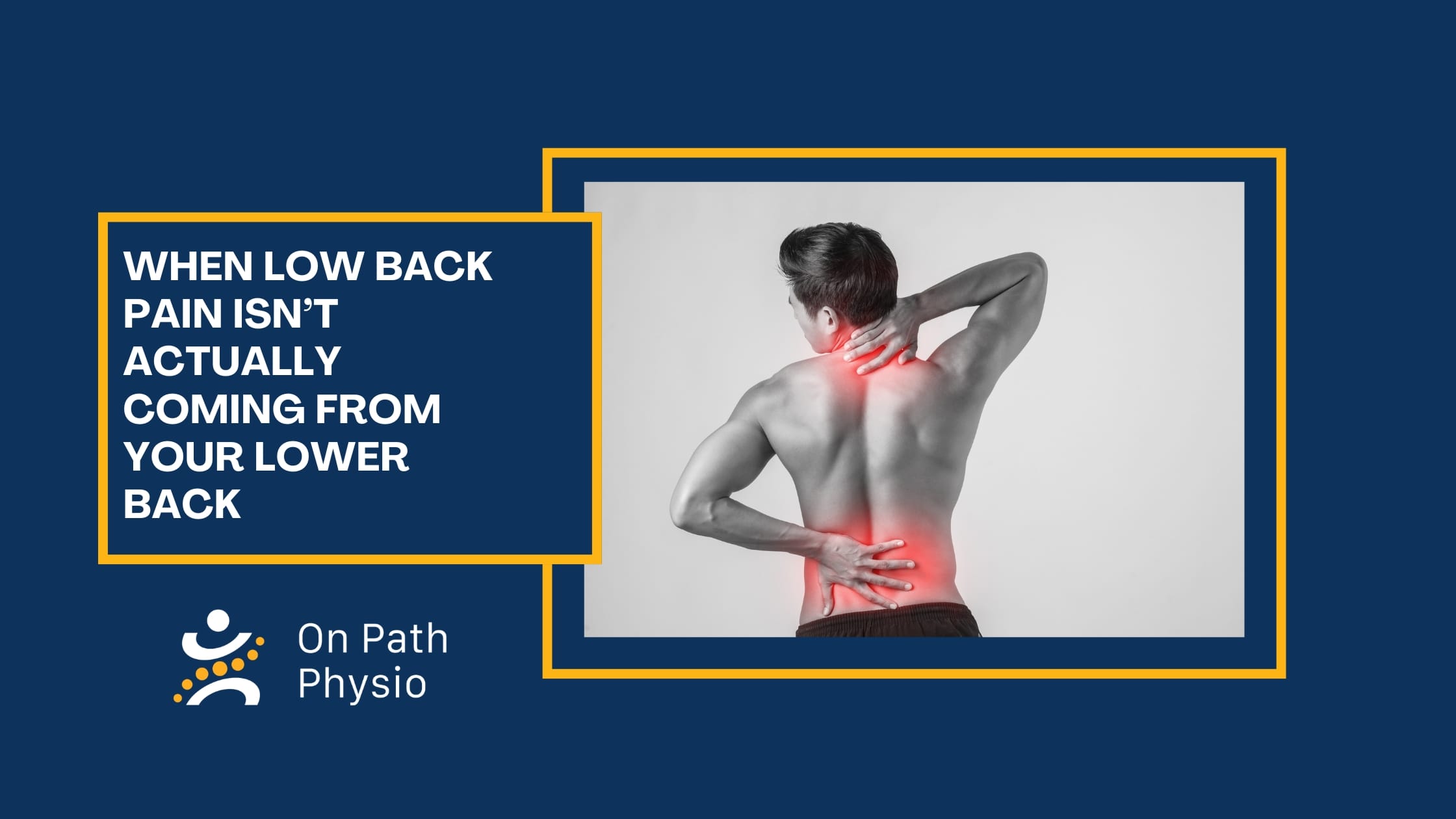
Many of us move through our days without a second thought. We sit at desks for hours, lift boxes, train at the gym, and juggle busy schedules. Then one day, your lower back starts to ache. It may feel tight, sore, or even sharply painful when doing everyday tasks.
But what if your lower back isn’t the real problem?
Which Area Do We Often Overlook When We Experience Lower Back Pain
When something hurts, we naturally focus on that exact spot. However, one commonly overlooked region of the body is the upper back, the area between the shoulder blades.
This region carries more load than most people realise. Whether you’re working at a desk, driving, lifting, or exercising, the upper torso is constantly active. Over time:
- The deep spinal muscles become tense
- Stiffness develops
- Muscles struggle to relax properly during rest
- The underlying spinal joints gradually lose mobility
This progressive stiffness is different from structural conditions such as scoliosis. Instead, it develops quietly due to reduced movement and prolonged postures.
At On Path Physio, we frequently see patients with persistent lower back pain whose real issue lies higher up in the spine.
Why the Upper Back Matters So Much
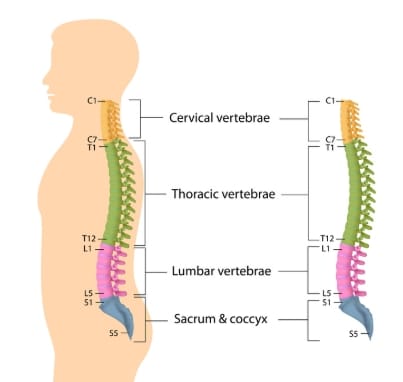
The spine consists of 24 vertebrae, each designed to move. However, the upper back (thoracic spine) has an additional role it supports the rib cage. While the ribs are essential for protecting vital organs, they also reduce overall flexibility in this region.
When the upper back becomes stiff and loses its ability to flex properly, the body compensates.
Here’s how that compensation creates pain:
- You bend forward to pick something up.
- Your upper back doesn’t move enough.
- Your lower back is forced to move more to make up for it.
- The lower back overstretches under load.
- Pain or injury develops.
In many cases, the lower back is simply working overtime because the upper back isn’t doing its share.
Why Stretching Alone Isn’t Enough to Provide Pain Relief for Upper Back
Many people attempt to fix back pain with basic stretches. Unfortunately, stiffness in the upper back is not that simple.
The deep spinal muscles often need releasing, but they sit beneath tight superficial muscles. Deep massage alone can be uncomfortable and often ineffective if joint stiffness isn’t addressed at the same time.
True improvement requires:
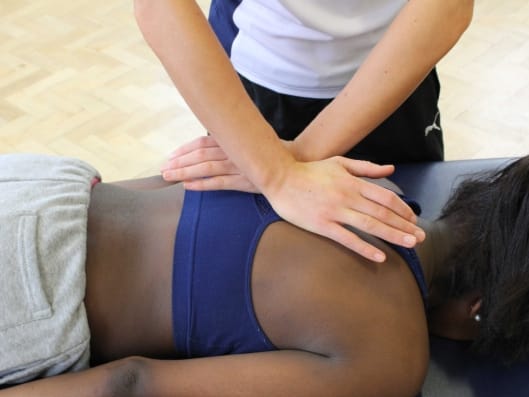
- Hands-on manual therapy to mobilise stiff joints
- Release of deep muscular tension
- Guided movement retraining
- Gradual restoration of thoracic mobility
And importantly, it takes time. For many patients, meaningful change occurs over 4–6 weeks, not a few days.
The positive side? Once the upper back frees up, patients often also experience reduced neck tension and improved posture.
The Risk of Ignoring Your Upper Back Stiffness
Persistent upper back stiffness, especially in those over 50, can accelerate degenerative changes such as arthritis. When mobility reduces, joint loading patterns change and wear can occur more rapidly.
One of the most common reasons for misdiagnosis in back pain is failing to assess the upper back’s contribution.
A Whole-Spine Approach
At On Path Physio, we take a hands-on approach to assessment and treatment. While exercise plays an important role, it isn’t always enough on its own. Restoring joint mobility and addressing deep muscular stiffness are essential components of effective care.
If your lower back keeps flaring up despite stretching and strengthening, it may be time to look higher.
Sometimes, the real problem isn’t where you feel the pain.
Don’t let ongoing discomfort hold you back. Book an appointment today to find out how we can help you achieve lasting relief.