
Pain.
It’s the number one reason people walk through the doors of a physiotherapy clinic. Whether it’s your lower back, neck, shoulder, or ankle, pain is inconvenient, frustrating and limiting. It stops us from doing what we need to do and keeps us from enjoying what we love.
But pain also makes us worry Is something seriously wrong? Why isn’t it getting better faster?
Let’s break down why pain happens, why recovery isn’t always comfortable and why sticking with therapy (even when it’s tough) is crucial for long-term results.
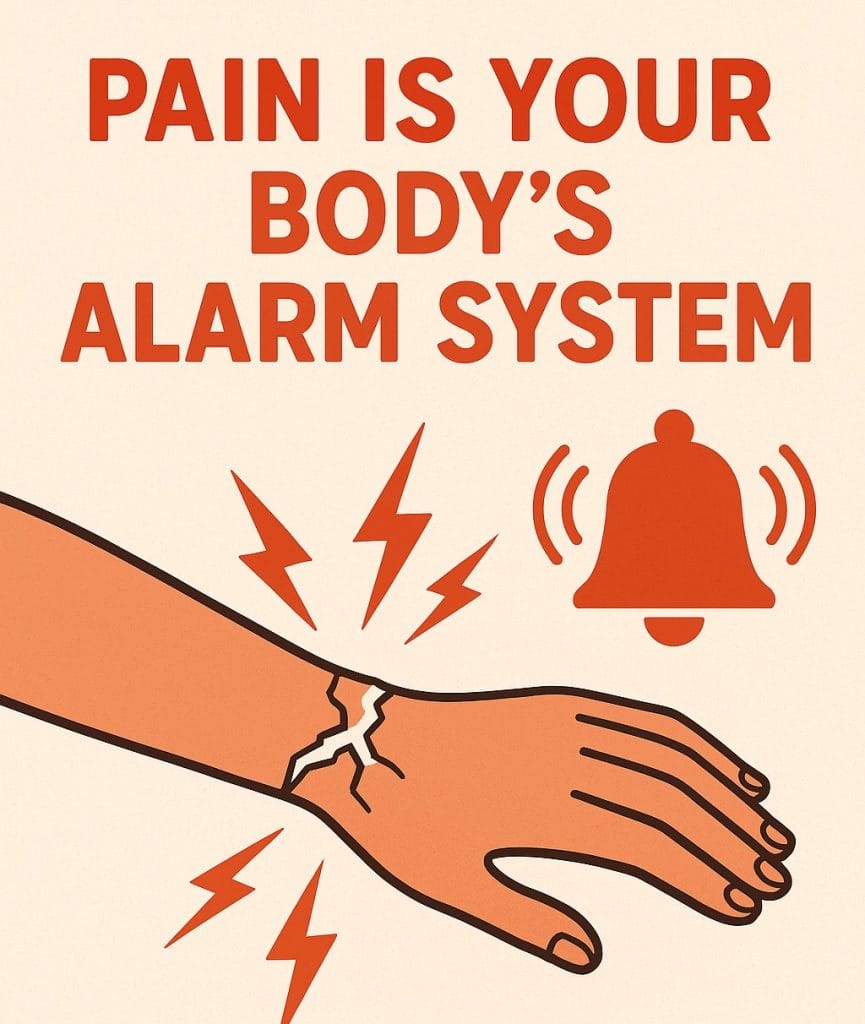
Pain: Your Body’s Alarm System
Pain is a signal your body’s way of saying something needs attention.
A simple knock to the elbow or a fall that results in a broken bone will both create pain, but the body’s response behind the scenes is much more complex.
Take a fractured wrist, for example. After the initial shock (“I can’t believe this happened!”), the pain is intense. But once the bone is stabilised in a cast, the pain eases and you’re told: “Six weeks to heal.”
You accept it. You wait. And finally cast-off day arrives.
Great! Freedom!
…except now your wrist won’t bend. It’s stiff. It hurts.
And the natural question is: “Why? Isn’t it healed?”
Why Everything Feels Worse When the Cast Comes Off
What most people don’t realise is that healing isn’t a neat, tidy process. It’s chaotic.
When an injury happens, the body sends fluid and inflammatory cells rushing to the area to clean up damage and begin repair. While the cast protects and aligns the bones so they can heal safely, the surrounding tissues are also affected:
- Swelling makes joints stiff
- Muscles weaken from lack of use
- Ligaments become sensitive
- Excess tissue forms and binds structures together (hello, scar tissue)
So, when the cast comes off, the wrist is healed but it’s also stuck.
This is where physiotherapy comes in.
Why Therapy Can Be Uncomfortable (and Why That’s Normal)
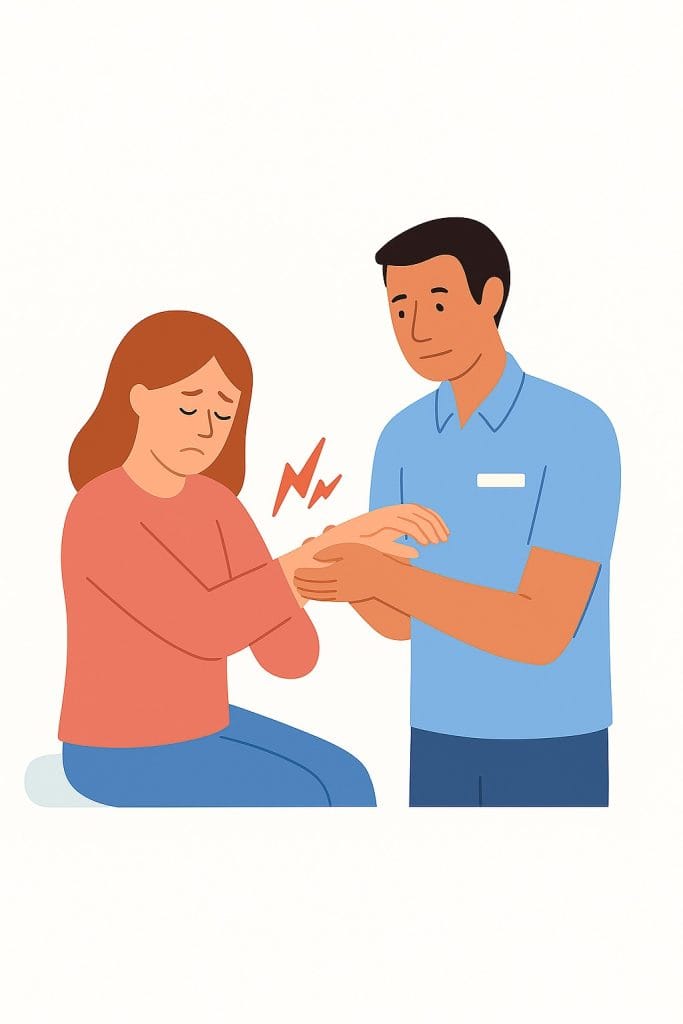
To restore normal movement, your physio needs to:
- Mobilise stiff joints
- Break down scar tissue
- Stretch tight muscles
- Settle irritated ligaments
- Re-train movement patterns
And yes, sometimes this is uncomfortable. Not harmful. Not dangerous. Just part of reclaiming mobility.
Often, patients feel sore after a session because tight or sensitive structures are being encouraged to move again. This soreness should settle within a day and your physio will always work within safe boundaries.
The Biggest Mistake? Stopping Therapy Too Early
Many people stop attending physio because they think the soreness from treatment means things are getting worse.
But stopping early can lead to long-term stiffness and reduced function.
Because really there’s no point having a strong wrist if you can only bend it halfway.
At On Path Physio, our approach is hands-on. Most injuries require a combination of joint mobilisation, muscle therapy, and corrective exercise. Exercise alone often isn’t enough to free up stiffness or break down scar tissue.
In the End… It’s Not the Injury It’s the Management
Injuries happen.
But how they’re managed determines whether you regain full function or end up with ongoing restrictions.
Physiotherapy may involve some discomfort, but it’s purposeful and temporary and it’s the key to getting you back to doing what you love.